Skip to the manual
The Cheat Sheet

The Root War Manual

Discover the cheat sheet to learn to play Root.

Rabbit Ambush card
Foxfolk Steel card
Four players around the Woodland map
Victory point marker
01

Fundamentals

setup, then the rules people get wrong
Part one

The game starts before turn one

Building a legal table

Every faction has a Reach value. The factions in play must add up to the minimum for the player count:

2 players ≥ 17 3 players ≥ 18 4 players ≥ 21
  • Base Reach: Cats 10, Birds 7, Vagabond 5, Alliance 3.
  • All four in a 4 player game is 25, comfortably legal. At 3 players, dropping the Cats or Birds fails the minimum, so one big army is always present.
  • Deal each player three cards. Hand limit is five, checked at the end of Evening.
Choosing a faction, and what to look at
  • You choose. Lay out one more faction than there are players, then draft in reverse turn order, so the last player picks first.
  • Ask who will police the table. If nobody wants the Cats or Birds, the Vagabond and Alliance win on tempo alone.
  • Match the seat, not the art: the Cats want to move first, the Alliance wants to move after the armies commit.
  • Never pick a card-hungry faction (Birds, Alliance) if you plan to skip drawing. Cards are their fuel.
Setting up the map
  • Marquise places the keep in a corner, then a warrior in every clearing but the diagonal corner, plus sawmill, workshop and recruiter.
  • Eyrie takes the corner opposite the keep: roost plus six warriors, then two Loyal Vizier cards into the decree.
  • Alliance places nothing. It starts with three supporters and grows out of other people's mistakes.
  • Vagabond enters last, into any forest, and picks a character plus starting items.
  • Four ruins go on the map. Each one is a free VP and an item for whoever explores it.
Part two

The rules people get wrong

The three phases
  • Birdsong is preparation: income, wood, decree, supporters.
  • Daylight is actions: build, move, battle, craft, dominance.
  • Evening is scoring, drawing and discarding down to five.
Ruling a clearing
  • Most warriors plus buildings rules it. Tokens and pawns do not count. A tie means nobody rules.
  • Exception: the Eyrie rules on ties, though not in empty clearings.
  • To move you must rule either the origin or the destination. The Vagabond ignores this entirely (Nimble).
Battle
  • Two dice: the attacker takes the higher, the defender the lower. Both sides hit at once, so there is no winner.
  • Hits from dice are capped by your warriors in that clearing. Extra hits from cards or abilities are not capped.
  • A defender with no warriors is defenceless: the attacker gets one extra hit.
  • The side taking hits chooses losses: warriors first, then buildings and tokens.
  • Every enemy building or token removed pays 1 VP to anyone. The most forgotten source of points in the game.
  • Ambush: two hits before the dice, cancelled only by another ambush. There are five in the deck.
Cards, crafting and dominance
  • Bird cards are wild for any suit. If an effect demands a bird, nothing substitutes.
  • Crafting pays VP directly: the free income most tables ignore. The Eyrie always scores one (Disdain for Trade).
  • Dominance activates in your Daylight at 10+ VP. You give up the VP track forever and win by ruling three clearings of that suit, or two opposite corners for the bird card, at the start of your Birdsong. Removed from the deck at two players.
Doctrine note

The map is infrastructure; the VP track is the till. You can hold half the wood and still lose. The question each turn is never "how much do I control" but "how many points does this turn produce".

Marquise warriorMarquise de Cat

Industrial engine · 25 warriors · 3 actions
Scoring curve
Fast, then stalls: villain on turn 2, corpse on turn 8.

The engine

One building every turn, every turn. Sawmills make wood in Birdsong, recruiters make warriors and draws, workshops make crafting. Each repeated building of a type scores more than the last.

Solved opening: S.O.R.

Sawmill, Overwork, Recruiter. You end turn 1 with two wood; turn 2 places the third recruiter and you are drawing two cards a turn. Which clearing takes the first sawmill depends on your hand: Overwork needs a card matching that clearing's suit.

Golden rules

  • Workshops rarely earn their wood: a sawmill or a recruiter almost always pays more.
  • Wood only travels through connected clearings you rule. Cut the middle and the pile is stranded.
  • Do not stack your three starting buildings in one place: that is a single target.
  • Three actions for 25 warriors: you cannot police the whole wood. Every battle that does not defend the economy costs you a building.
  • You are the turn 1 villain. Say it out loud: "I start fast and finish slow" is true, and it saves you.
Directive

The two-move rule. Any clearing within two moves of the keep is defensible: Field Hospitals returns warriors to the keep and March puts them back on the front in one action. Build there.

The close

No natural burst. The only bomb: one or two turns without scoring while wood and empty slots pile up, then two or three buildings back to back for 8 to 11 VP. The risk is that the wood pile is a magnet.

Playing against the Marquise
Do

Burn wood and sawmills, cut the chain of ruled clearings, and squat the empty building slots so she cannot rebuild.

Don't

Destroy her buildings late: that frees the slots she needs to rebuild and score them all over again.

If that is you: spread the wood across defensible clearings and never rely on a single corridor.

Eyrie warriorEyrie Dynasties

Compound rent · 7 roosts · the Decree
Scoring curve
Compound interest: turn 6 without turmoil is close to a won game.

The engine

You score in every Evening according to the roosts on the map, up to 5 VP a turn. The whole game is: place roosts, do not lose them, do not fall into turmoil.

The Decree

One or two cards added each Birdsong, only one of them a bird. It resolves left to right: Recruit, Move, Battle, Build. A decree you cannot fulfil is turmoil: minus one VP per bird card in it, everything but the viziers is discarded, the leader changes, and the day ends.

Leaders

  • Despot scores an extra VP whenever a battle removes a building or token. The consistent one.
  • Charismatic recruits double. Fast, but an empty supply is turmoil: plan to lose warriors on purpose.
  • Commander adds a hit while attacking. The table's hammer.
  • Builder crafts for full VP. Almost always the weakest pick.

Golden rules

  • Do not try to win battles: fulfil the decree. Sacrificing a warrior to tick Battle is correct play.
  • You rule on ties, so make the table beat you by one. Build cheaply off that.
  • Losing a clearing is acceptable; losing access to a suit you decreed is not.
  • An empty hand means decreeing whatever you drew. That is the worst early mistake.
Directive

Keep the blue edges. Recruit and Build with birds only. Move is the dump slot, since one warrior shuffling back and forth satisfies several orders, so suited cards go there. Make Battle blue when you can: opponents will empty the clearing on purpose.

The close

Last turn, decree something unsustainable on purpose, overloaded with suits, to squeeze out the actions that cross 30. It is all in: if you fall short, turmoil disarms you exactly when you cannot defend.

Faction board

Eyrie faction board
Playing against the Eyrie
Do

Empty the clearings of the suit it needs for Battle or Recruit, and kill roosts (1 VP for you, less rent for it). Best moment: a decree loaded with birds.

Don't

Tie a clearing with it. The Eyrie rules on ties, so you have to beat it by one warrior.

If that is you: diversify the suits in the decree and save an ambush for your key roosts.

Alliance warriorWoodland Alliance

Insurgency · 10 warriors · hardest to play
Scoring curve
Starts at nothing, explodes on revolt, can bloom twice.

The engine

Sympathy (10 tokens, each worth more VP than the last) plus bases. Bases unlock officers, who give you extra actions in your Evening: move, battle, recruit, organize.

Hidden weapons

  • Outrage: removing your sympathy or moving into a sympathetic clearing pays you a card of that suit. Your presence is a toll booth.
  • Guerrilla war: defending, you take the higher die. Two of your warriors beat six of theirs.
  • Supporters sit outside your hand limit. Capped at 5 without a base, unlimited with one.

Golden rules

  • Early sympathy goes in clearings without enemy warriors: you get paid if they clear it, and you dodge Martial Law (3+ warriors costs one extra supporter).
  • Save birds for revolt pairs (two supporters of the same suit). Spending them on loose sympathy is the expensive mistake.
  • Mobilize early: the stack is worth more than the flexibility.
  • Four or five officers by the end. Three is not enough; six or more and you have no warriors left.
  • When sympathy gets expensive, Organize: turn a warrior into a token and score.
  • The threat of a revolt negotiates better than the revolt itself.
  • Losing a base discards your supporters of that suit and half your officers. Hold it with three or more.
Directive

First base as early as possible. Without one your economy is capped at five supporters and zero officers. With one, you are playing a different game.

The close

A revolt removes every enemy piece in the clearing and pays 1 VP per token and building. Aimed at a loaded clearing, it is a double digit swing in one action.

Playing against the Alliance
Do

Step on sympathy early even though it pays them, keep 3+ warriors in key clearings for Martial Law, and destroy bases the moment one appears.

Don't

Trickle warriors toward sympathetic clearings: every move pays them a card. Go once, in force.

If that is you: expand on two fronts so no single occupation can shut down Organize.

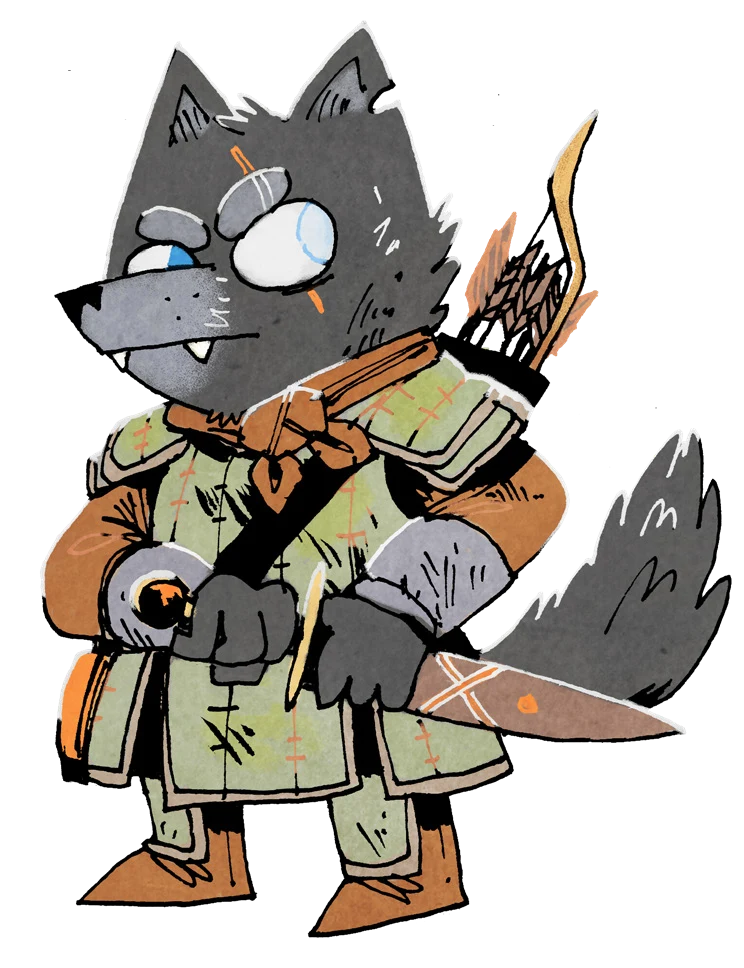
Vagabond pawnVagabond

One pawn · items are actions · nobody hits him
Scoring curve
The slowest faction and the one nobody attacks. That is why it wins.

The engine

Every unexhausted item is an action this turn. VP come from ruins (1 each), quests, Aid, and infamy (removing pieces of hostile factions).

Golden rules

  • Turns 1 to 3: ruins and Aid. Prioritize boots and swords.
  • A clearing with hostiles costs an extra boot. Before declaring war, check it does not cut your road to an ally.
  • Slip is free and the only way into a forest. Sleeping there repairs everything.
  • You cannot be removed: battle only damages items. Exploit that apathy without rubbing it in.
  • Revolts and "Favor of" damage 3 items at once.
  • At 4+ players, a coalition with last place is a real plan B.
Directive

Pick a lane by mid-game: hostile (war plus infamy) or allied (Allied plus 2 VP per Aid). The hybrid, hostile with one faction and allied with another, is the strongest line.

Characters: which one, and why

Click card on any of them to read the full card.

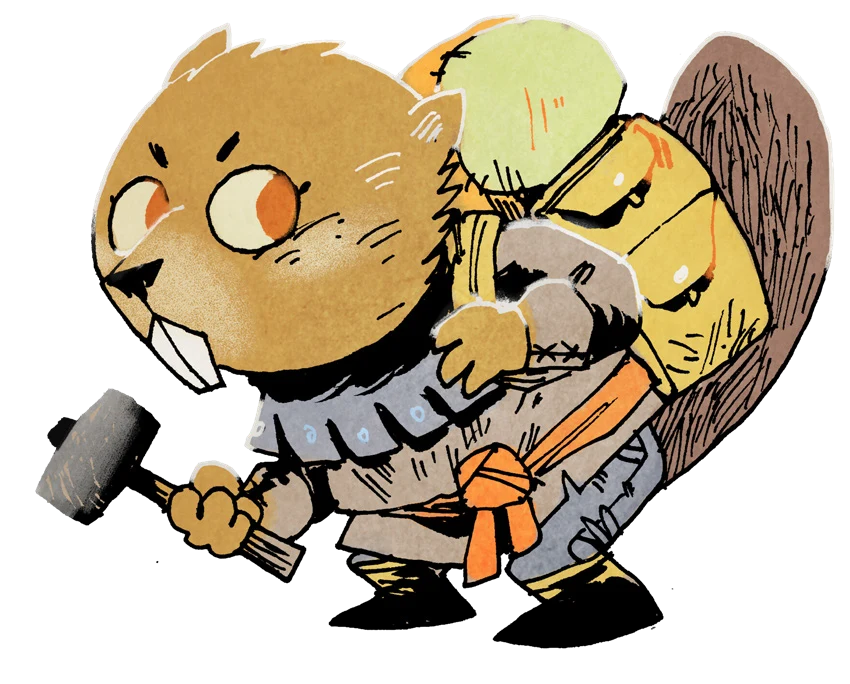
Thief
Thiefcard

Steal wrecks hand-dependent factions. The pick that also plays defense for the table.

Tinker
Tinkercard

Day Labor is the crafting engine: mines the discard for exactly the suit you need.

Ranger
Rangercard

Hideout repairs three items and ends Daylight: the one who survives a war footing.

TRICKWhichever character you draft, the shape of the turn is the same: items are actions, so the real question is how many unexhausted items you will hold when your turn comes round. Read the special ability last, not first.
The satchel: what each item buys you
Boots
Boots
One move each. The item you can never have too many of.
Sword
Sword
One battle each. Two swords is the minimum for an infamy plan.
Crossbow
Crossbow
One free hit, no dice, no risk. The safest damage in the game.
Hammer
Hammer
Craft, or hit a ruin. Doubles as your ruins opener.
Club
Club
Battle without the sword tax. Cheap infamy for a hostile line.
Sack
Sack
Carry more before you must exhaust. Quiet, cumulative value.
Coins
Coins
Buys goodwill and quest completion. The diplomat’s item.
Tea
Tea
Ignore one point of damage. Insurance against Favor cards.
Torch
Torch
Explore ruins. Four ruins is four free VP plus four items.
TRICKDamaged items still count as yours, they just do nothing until repaired, so a single Ranger nap or Tinker turn can hand you back three actions at once. Before declaring war, count how many items you can afford to lose in one revolt: it is three.
Playing against the Vagabond
Do

Hit him before the satchel fills; "Favor of" and revolts damage 3 items at once. Coordinate the punishment between two players.

Don't

Leave him alone "because he is not bothering anyone". That is precisely the plan. Ask out loud how long since anyone touched him.

If the Vagabond is you: stack items fast and never give the table a reason to coordinate early.
03

The deck: cards that swing games

Ambush · five in the deck
TRICKTwo hits before dice, cancelled only by another ambush. Count them: once three have been played, the table stops respecting the threat, which is exactly when yours is worth the most. The bird ambush is the one to hold, because it works in any clearing.
Swing cards
TRICKBrutal Tactics buys a kill by handing your victim a point: only worth it when the piece you remove is worth more than one VP, which means buildings and tokens, not warriors. Royal Claim converts board width into a burst, so it is the card that punishes a table that let someone spread quietly. Partisans turns one battle into a chain: every warrior it removes in a matching clearing keeps paying.
Crafted items
TRICKItem cards are the quiet VP engine: two or three crafts is the margin in most close games. Craft the ones that also arm the Vagabond last, and never craft a persistent effect you already have, since it does not stack.
High priority
  • Favor of the [suit]: removes every enemy piece in all clearings of that suit, 1 VP each. The most decisive card in the deck.
  • Ambush: two free hits while defending. Hold one for your most expensive piece.
  • Better Burrow Bank / Tax Collector: recurring draw. Sustained card advantage wins long games.
General criteria
  • Crafted items pay VP directly: in a close game, two or three crafts are the margin.
  • Persistent effects do not stack. If you already have one, do not craft the copy.
  • Dominance is plan B for military muscle (Cats, Birds). With the Alliance it almost never closes.
05

The seven edges

Nothing here is printed on a component. These are the habits that separate players who know the rules from players who win, and they are all learnable in one session.

All seven in one line

The map is infrastructure; the VP track is the till. You can control half the Woodland and still lose. The question each turn is never «how much do I control?» but «how many VP do I generate per turn, and who generates more?»
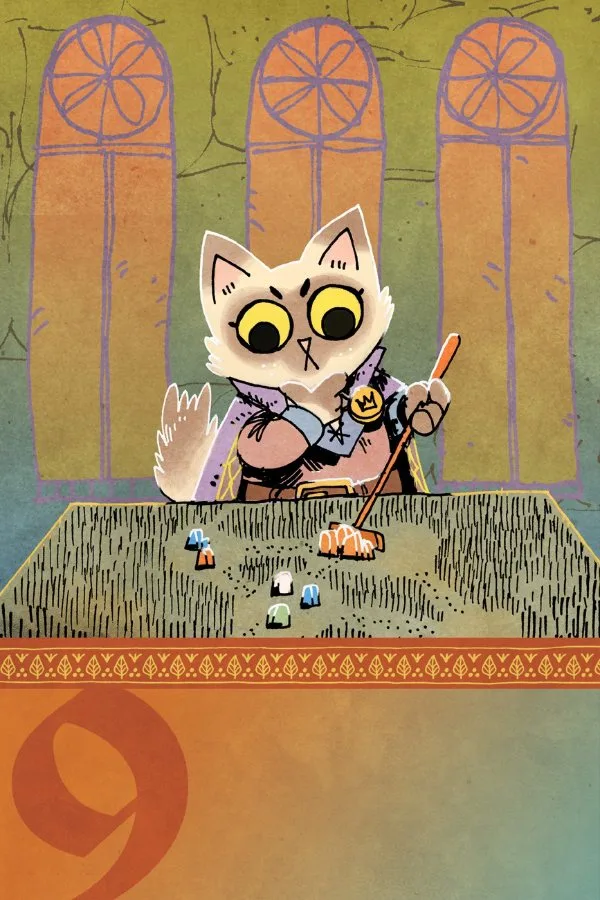
A commander studying the map
1Count everyone’s VP rate, out loud

30 VP over 8 to 10 turns is roughly 3 a turn. Work out who arrives at 30 in three turns if nobody interferes: that is your target, not whoever leads the track today. Hitting the leader just crowns second place. Almost nobody at the table does this arithmetic, which is exactly why it is an edge.

2Enemy buildings and tokens are free income

Every enemy building or token removed pays 1 VP to anyone, any time. Most tables treat battle as territory control and forget it is a points faucet. Sawmills and roosts are the cheapest VP in the game and they sit unattacked for hours.

3Talk

The hidden resource is the promise. «I won’t touch your base this turn if you spend your move elsewhere» costs nothing and buys a whole turn. Three turns happen between yours and no position survives the whole table, so point at whoever is fast and do not be the target. Silent players lose to loud ones of equal skill.

4Craft anyway

Crafting looks like a side activity and it is 5 to 9 VP across a game, plus persistent effects. Skipping a craft to squeeze in one more battle is the most common invisible loss. Cards are actions plus ambushes plus crafting: drawing is income, not luxury.

5Time the sprint

Trickling 3 VP a turn paints you as the leader early. Banking two turns and dumping 10 VP goes unnoticed, because the table only reacts to the track. The risk is that they break your stockpile first, so sprint before it becomes a magnet.

6Attack the input, never the output

Wood chains for the Cats, decree suits for the Birds, the first base for the Alliance, the item pile for the Vagabond. Break the thing that feeds the engine, not the points it already banked. And accept the corollary: you cannot defend everything, so let replaceable pieces fall and defend only what generates points.

7Ambush discipline

Five in the deck, and the threat is worth more than the play. A held bird ambush changes how the whole table moves against you. Spend one to save your most expensive piece, never to win a fight you did not need.

04

Operations: before every turn

Turn checklist
0 of 6 checked Reset
Common mistakes, by frequency
  1. Playing for territory instead of scoring rate.
  2. Attacking the track leader instead of the speed leader.
  3. Trickling points and painting yourself as a threat early.
  4. Running out of cards (fatal for Birds and Alliance).
  5. Forgetting that removing enemy pieces pays VP to anyone.
  6. Not negotiating. Stay quiet and you play with one hand tied.

Notes by player count

  • Two players: no dominance. More direct; tempo matters more than politics.
  • Three players: the militant faction is the only police force. Whoever holds it decides the pace of the whole game.
  • Four players: three turns happen between yours. Defend what scores, concede the rest, and talk before you commit.